
The Female Burden of Communal Grief
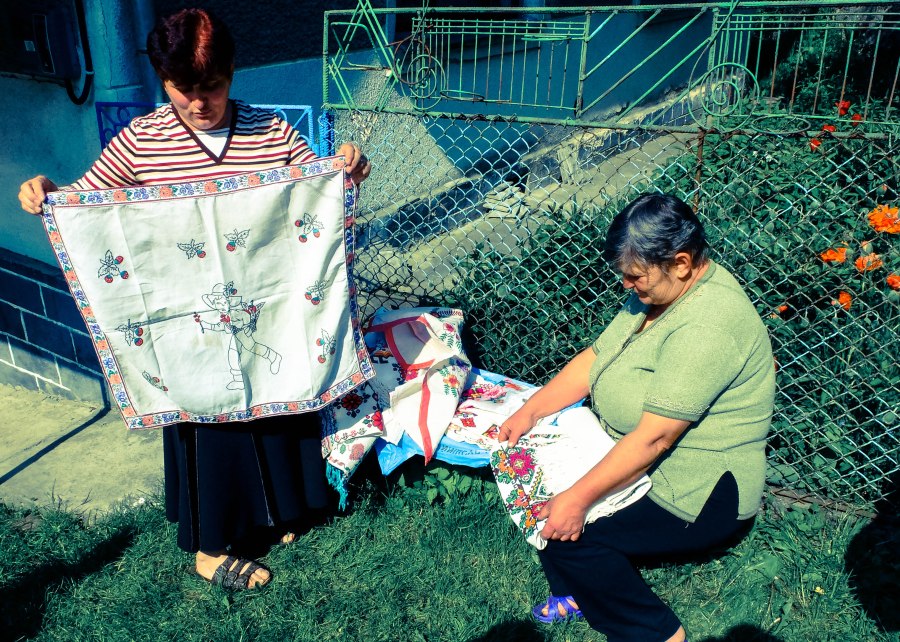
Ethnic Ukrainian woman displaying their hand woven textiles.
Introduction
On the 1st of July 1916, the opening day of the Somme offensive of World War 1, the allies launched a major attack on the German forces that were entrenched near the northern French village of Beaumont-Hamel. Among the forces that went “over-the-top” that morning was the newly formed Newfoundland Regiment, a group of soldiers made up of volunteers from across the small island dominion that were hastily assembled, trained, and brought to the front lines. In less than a half an hour nearly the entire regiment had been wiped out. Of the 800 young Newfoundland men that walked across no-man’s-land that morning, just 68 were able to answer the roll call the next day. As the war carried on more young Newfoundland men were called in to fill the gaps left by mounting casualties, and by the wars end approximately 3800 men were either killed, injured or taken prisoner – a staggering 61% of all Newfoundlanders who served (Veterans Affairs Canada, 2026); (The Canadian Encyclopedia, n.d.). The loss of so many lives had a significant impact on the colony, and the challenges were compounded by the sick, disabled, and traumatised men that did return. As a child growing up in Newfoundland we learned in school about the difficulties faced by small communities in the wake of such devastating losses – the collective grief, the economic gutting of small communities, the disruption caused by demographic imbalance, and the long-term mental health effects from trauma. July 1st has been dedicated as Memorial Day in Newfoundland, a day to be remembered for the young men that sacrificed themselves on the battlefield of Beaumont-Hamel, however, no day has been dedicated to the women who filled the vacuum left by the fallen men. No public holiday or province-wide day of remembrance has been given to the women who changed public opinion regarding their roles and the importance they played in maintaining a functioning society, or how they made marked headway for the women’s suffrage movement which ultimately led to women’s right to vote. This essay will argue that after a war has claimed the lives of many young men from a community, it is the women who are burdened with rebuilding local structures and maintaining social cohesion, all while carrying the emotional weight of communal grief in their absence. To make this argument I will write cross-historically, drawing on sources that examine community trauma from the past and the present, while tying them to my own experiences and creating a space for future investigation.
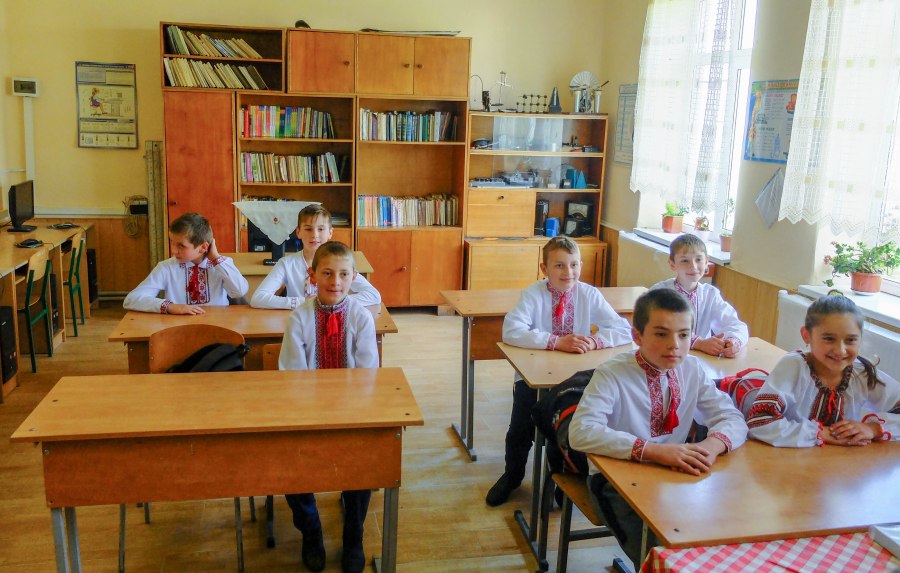
In the summer of 2016 I spent some weeks in Vil’shynky, a farming village in the Zakarpatska Oblast of Ukraine. I was a part of a small group attending a field school which was designed to give us experience conducting research with marginalized populations. The ethnic Ukrainian village where I was embedded was used in our research as a comparison to other, less fortunate communities: the Romani ghettos in Svinia and Prešov, Slovakia. It was obvious that although the Ukrainians of Vil’shynky are monetarily poor, they are landowners and have been connected to the region since time immemorial, thus giving them natural resources from which they can draw a sufficient income and secure a sense of belonging. What was not obvious was that the community was grieving. A community member was killed in Donetsk after the Maidan Revolution (or Maidan Coup depending on where you stand) sparked conflict there. The community member was a young man; he was a soldier and former student at the village school in Vil’shynky where he is now memorialized on a plaque in the school hallway. Since the conflict in Donetsk has spiralled into a full-on Ukraine-Russia war, I often think about the young boys that I met in the community and wonder about where they are today. Have they volunteered or been conscripted to fight on the front lines? Have they survived? Are there more plaques of fallen soldiers now lining the walls of the school? I also think of the community members: are they coping with profound pain? Are they experiencing the same type of collective grief, economic gutting and long-term mental trauma that was present during and after WWI Newfoundland? Do the women of Vil’shynky, like the women of Newfoundland, find themselves responsible for restoring local systems and preserving communal bonds, all while bearing the heavy grief of loss? These are the questions that have influenced me to write on this subject, and although they cannot be answered without returning to Vil’shynky, I can, through the historical research of past events, make an informed speculation on the present situation in Vil’shynky, which will leave open future potential for a more focused and in-depth study of the community.
Community Trauma and Collective Grief
Trauma is the result of experiencing an event or series of events that go beyond the edge of what is able to be perceived and/or comprehended – a temporal sequence that is too much to bear (Audergon, 2004, p. 19). It is often understood as a personalized phycological phenomenon, an individual internal experience that is unique to the person. Community trauma on the other hand is not an individual experience. It has a collective dynamic that involves entire populations, shifts future trajectories and influences the course of global histories. When entire communities suffer, the trauma remains embedded in the fabric of family, community, and politics, and may need much more time to heal than an individual’s trauma. Audergon (2004) writes “If several years is not a long time for individuals to begin to be able to speak about their loss and trauma, 50 or 100 years begins to seem like a short time for a society to grapple with wide-scale atrocity” (p. 21). When war-related trauma is framed solely as an individual psychological problem, it reinforces a sense of aloneness and implies that the ‘problem’ resides within the person, further distancing them from their community. In doing so, it mirrors the very dynamics of trauma itself: a feeling of being severed from others, emotionally dulled, and trapped within one’s own experience (p. 20). Traumatic events erode the sustaining bonds that keep a community together. In her book titled Trauma and Recovery (1997), Judith Herman describes the effects of communal trauma and the importance of resolidifying the group as a tool for recovery. She writes “The solidarity of a group provides the strongest protection against terror and despair, and the strongest antidote to traumatic experience. Trauma isolates; the group re-creates a sense of belonging. Trauma shames and stigmatizes; the group bears witness and affirms. Trauma degrades the victim; the group exalts her. Trauma dehumanizes the victim; the group restores her humanity” (p. 117). Communities not only offer the opportunity for mutually supportive relationships but also the potential for shared empowerment. Members can meet one another as peers, each equally carrying their own pain and need for support, yet each also bringing something valuable to the table. A cohesive community draws upon and cultivates the assets of every individual. In doing so, the group as a whole develops a deeper capacity to hold and make sense of traumatic experiences than any one person could manage alone, allowing each member to draw on the collective resources of the community to support their own healing and integration (Herman, 2004, p.118).
Community trauma has comparatively less information available to the researcher than individual trauma, yet Audergon (2004) and Herman (1997) provide us with a pair of effective articles that shed light on how collective grief and community trauma is created, processed, and treated, ultimately reverberating through communities and embedding within the shared narratives and communal memory. Unfortunately, the articles give little attention to the gendered labour that often underpins community recovery, particularly the central role women play in rebuilding social structures and carrying the weight of communal grief.
Historical Case Studies
To understand what the Ukrainian village of Vil’shynky may be experiencing and to be able to speculate on what the future holds for that community, one must begin by looking outward and backward. By examining three historical cases – WWI Britian, Nicaragua during the Contra War, and Bosnia in the 1990s – we can trace the recurring ways conflict fractures daily life, reshapes social roles, and places disproportionate burdens on women. Through this lens, the experiences of Vil’shynky become part of a broader, historically grounded story and one that helps illuminate what the village may be enduring now and what challenges its women may face in the years ahead.
Great Britian – WWI: 1914-1917
The demographic consequences of mass male mortality in Britian were profound and not exclusively bound to the communities of the far-away dominions like Newfoundland. According to Winter (1977), In England and Wales 74 percent of the men who died were under the age of 30, and if you were under 20 there was a 1 in 6 chance that you wouldn’t make it home (p.452). If a man was a part of the Armed Services (Army) the odds were even worse – nearly a 50 percent chance that you would be killed or maimed (p. 451). Women, many of them now widowed with limited education and low wages, filled the spaces left by men. Before the war the presence of women in the industrial workforce was negligible, but by the end in 1917 they had made up nearly half of the industrial worker base (Monger, 2014, p. 524). In areas that were vital to the war effort women routinely worked longer than 60 hour weeks (Monger, 2014, p. 524) all while caring for children and elderly community members. But for many women their roles did not dramatically change, they just intensified. Women were always historically forced into the caregiver and nurturer role, and with the war creating grieving widows and broken families, those roles became more important as a means to keep a community together and avoid total social collapse. To make a bad situation worse, the men that were coming home from fighting were oftentimes traumatized by the brutality of war and suffering from PTSD or had been maimed and in need of intensive care, and it was left to the women who were juggling external work to extend their community caregiver role.
In Monger’s article titled Nothing Special? Propaganda and Women’s Roles in Late First World War Britain, he argues that the war did not open up all of the grand working opportunities for women that are often touted, but instead it was their traditional contributions that received greater recognition and praise. The importance of women’s roles were formally recognized by the state as indispensable to national survival and a “special” propaganda campaign was designed by the National War Aims Committee (NWAC) to appeal to those women. The campaign ran parallel with a broader narrative of patriotic civilian duty. It emphasized the importance of each citizens individual contribution and acknowledged that war was placing unsustainable demands on women and that more needed to be done to address their “war-wariness” (p.524). However, the solution was half-hearted. The NWAC would provide the space and coordination to hold meetings for ‘leading women’ in the community, but they were of a “purely local and friendly nature for mutual encouragement and support” (p. 524). Although women’s contributions to maintaining a continuing and functioning society were accredited by the state there was still a reluctance to include them in formal public gatherings. By early 1918 the employment of female industrial workers was already declining (p. 536). The war had come to an end, the demand for war munitions dropped and many women could now leave the factories and focus on the rebuilding and maintenance of their community. What were once considered menial tasks performed by women were now acknowledged as crucial duties to a healthy, functioning society. Although the women of post WWI were living in an age of gendered oppression and didn’t receive the required support from the state for their efforts, it was these efforts that shone a spotlight on the importance of their role, gained them respect, and set the stage for a future fight for equal rights.
Nicaragua – Contra War: 1981-1990
From 1981 to 1990 Nicaragua endured the US-sponsored Contra War. Nicaraguan civilians had a somewhat different experience than those of the Britian because the war engulfed them, they were immersed. 1.5 percent of the country’s population was murdered, injured, or abducted, with 1 in 6 being uprooted and relocated (Sommerfield & Toser, 1991, p. 84). The Contras carried out a mass terror campaign on the citizens aimed to paralyze rural life and silence communities and individuals; they hoped to demoralize the population and destroy any hope of revolution. Sommerfield & Toser did a study of a Nicaraguan community shortly after the conflict ended and what they found was unsurprising: The trauma inflicted on these communities was profoundly damaging to the communities and individuals involved. What was surprising was the gendered imbalance. 91% of women to 62% of men were diagnosed as cases with psychological disturbance (p. 84) and 50% of women to 25% of men were diagnosed with PTSD. The researchers hypothesized that the higher symptoms levels found in women compared to men was due to vulnerability. The differing societal roles played by the genders put women in a more at-risk situation. Even though the women were not front-line fighters, they were exposed to similar levels of violence as men. For all the fear and danger that comes with war, being part of an army unit allowed the men to feel more engaged and impactful. Through their military action the men were able to externalize some of the emotional stresses that comes with war, thus giving them the ability to influence events. Women on the other hand were alone and unarmed with their children and the elderly – two other vulnerable groups. With so many men away, the women felt like sitting targets with little to do but wait for news of their loved ones. The study showed that after the war, although men suffered from the full range of symptoms of psychological disturbances, women experienced them at much higher levels. For example, 86% of women reported being plagued by psychosomatic symptoms such headaches, malaise, and dizziness, to 56% in men (p. 87). The majority of women in the study experienced episodes of panic attacks, with men coming in under 50% (p. 89). As for sleep disturbances and work difficulties, both genders reported similar levels (p. 90-92).
The Conta War in Nicaragua was very different than WWI. Families were split apart by having some members fighting for the Contras while others backed the government – the enemy were their own citizens and neighbours. Because the women were targets of brutality, they faced a different level of trauma than did the women in Britian. While the women of Britian and its dominions did not experience the same level of violence that was brought to the doorsteps of Nicaraguan households, they did share some of the same issues and consternations. Both British and Nicaraguan women were racked with the grief of losing family members, both lived their days with the persistent anxiety about the safety of the absent men from the community, and both had to endure the accompanying trauma while trying to hold together and rebuild the social fabric of a war-devastated community devoid of working age males.
Bosnia Herzegovina – The Bosnian War: 1992-1995
Being a part of the greater Yugoslav War stemming from the death of its leader and the fracturing of the nation, the Bosnian War was particularly brutal. With 3 opposing sides: The Catholic Croats, the Orthodox Serbs, and the Muslim Bosnians, the war was a three-way massacre with the Muslims taking significantly greater losses than the other two combined. Over 30,000 Bosnian soldiers and over 31,000 Muslim civilians were killed in what is now recognized as a genocide. The accompanying collective grief was no different than in the previously mentioned wars, as was the unequal burden of trauma placed on the country’s women. A postwar study that examined the psychological consequences and social stressors in Bosnian women showed that much like the women in Nicaragua, they too showed high rates of PTSD diagnosis and had noticeably poorer mental health than the rest of the population (Klarić et al., p. 168). As this study came on the heels of others such as the one done by Sommerfield & Toser, the research team had expected many of their findings to align: That the women exposed to war would suffer high rates of posttraumatic stress, that the cases of posttraumatic stress would intensify the closer to the fighting, and that postwar stressors would create a more difficult recovery and more pronounced posttraumatic disorders (Klarić et al., p. 168). While the primary aim of the study was to determine the degree of the associated posttraumatic symptoms and establish how postwar stressors prolonged the recovery period those affected, the study also reinforced the issue of unbalanced gendered trauma. Furthermore, it should be noted that much like the women of rural Britian, the Bosnian women who did not experience direct contact with the war still showed signs of trauma, albeit less than those who were thrust in the midst of it (p. 171). The researchers found that the closer to the war one was, the more likely that one would develop fully diagnosed PTSD, but this did not mean that those who did not experience direct fighting and atrocities where free from harm. Many of the same symptoms that the women of war-time Britian exhibited were also present in the Bosnian women who were far-removed from the fighting, most notably depression and anxiety.
The information gathered by the research team in Bosnia strengthens and supports that from other studies. Women bear an unequal burden when it comes to war-time trauma, especially amongst communities that are geographically removed from the conflict. When women are situated close to the front lines of battle, they are imposed into vulnerable positions without the means to defend themselves, yet when they are separated from the conflict, they are forced into the role of community caretaker while dealing with grief, depression, and anxiety.
What About Vil’shynky?
As the Ukraine-Russia war is still ongoing there is little available in the way of academic studies and information regarding the well-being of its communities and the women located within them. However, because the research conducted on women and communities from past conflicts has been so thorough and detailed, I can use it to make an informed speculation on the situation of Vil’shynky and the women of that village. Although impossible to predict accurate statistics such as casualties, rates of economic decline, migration etc., what I can say for certain is that is that Vil’shynky has not escaped unscathed and the level of trauma faced there falls somewhere between that of WWI Britain and the Nicaraguan communities during the Contra War. The country has put in place a recruitment order which has been broadened to include men from the ages of 25-60. The media stories coming out of Ukraine at the time of writing this essay report of human rights violations happening at a recruitment center in Uzhhorod, a city just 40km away – men who have been deemed medically unfit to fight have been forced into conscription (MSN, n.d.); (Ukrinform, 2026). This no doubt has raised the stress levels in the surrounding communities including Vil’shynky, where even the old and sick are not safe from recruitment. Since the village is located in the far west of the country it has avoided the conflict proper for now. Information acquired from the Sommerfield & Toser study and the Klarić study leads me to hope that if the physical battle can remain distant, the village’s geographical detachment from the front lines may shield the non-conscripted citizens from the levels of trauma that has lead to PTSD in Nicaragua and Bosnia. As of now, the women of Vil’shynky will be coping with the crushing anxiety and grief from losing men that have been conscripted to fight and/or friends and family members living in the battle-affected regions, all while meeting the demands of keeping a functioning community. In a speech at the Ukrainian Women’s Congress in Vinnytsia, Katarina Maternova, the Ambassador of the EU to Ukraine was quoted saying “Women are not only victims of war. They are architects of recovery” (Ukainska Pravada, 2026). The women of Vil’shynky will share both a unique yet similar experience as the women of Great Britian, Nicaragua, Bosnia, and of any country that gets affected by war – by individually dealing with their own personal trauma while carrying the responsibility of rebuilding something new from the rubble of what was once a functioning society.
Conclusion
War tears communities apart. It has a way of unraveling the social fabric of society even when the fighting itself is far away. The strain comes through absence – some people leave for military service, some from evacuation, and others for economic survival. Some never return. Families, often without husbands, sons, or brothers, live in a state of suspended fear, waiting for news, bracing for loss, or coping with the return of loved ones who have been forever changed, both mentally and physically, from the horrors of the frontlines. Everyday routines fracture as schools, workplaces, local institutions absorb the stress of change and uncertainty. War seeps into relationships, responsibilities and identities, reshaping communal life regardless of if any destruction reaches it. When the men are pulled away from the community, whether by force, choice, or necessity, women extend their roles and become the community anchors. They step in and fill the void left absent: managing households, sustaining local economies, caring for elders and children, and maintaining the social networks that keep a community functioning. Whether in Britain during the First World War, in Nicaragua during the Contra War, or in Bosnia in the 1990s, women have repeatedly found themselves carrying the emotional and practical burdens left in the wake of conflict while bravely assuming roles that were once gendered. Yet beneath the burden of these responsibilities lies a shared undercurrent of trauma – grief for those killed, fear for those still in danger, and chronic trepidation for their own safety and the wellbeing of their family. Despite vast differences in culture, religion, geography, and political context, women in wartime and postwar societies often navigate the same duality: holding their community together while tending to wounds that are deeply personal, yet universally shared.
As for Vil’shynky, it becomes clear that it has a difficult road ahead. While the full impact of the Ukraine-Russia war cannot yet be measured, the patterns observed in Britian, Nicaragua, and Bosnia offer a meaningful lens from which to understand what the women of the community are likely enduring. The settlement may be spared the physical destruction for now, but it has certainly not been spared the emotional, social and psychological upheaval that comes with forced conscription and lost community members. In this sense, Vil’shynky is not an exception but part of a long continuum in which women shoulder the burden of community trauma, healing, and reconstruction. As Katarina Maternova emphasized, they are not only victims of war but architects of recovery. The women of Vil’shynky, like those before them in other conflicts, will shape what emerges from this moment, carrying forward both the weight of loss and the strength required to rebuild what has been broken.
Looking ahead, I hope to return to Vil’shynky when the war has ended, and the community has had time to reshape itself in the aftermath. A future visit would allow me to document how the village’s women navigated this period of strain and transformation, and how their experiences compare with the patterns seen in earlier conflicts. Such research could offer valuable insight not only for scholars studying gendered labor, trauma, and community resilience, but also for policymakers and humanitarian organizations seeking to understand what recovery truly requires at the local level. In that sense, Vil’shynky has the potential to become an important case study; one that helps the world better grasp how ordinary people, especially women, rebuild life in the shadow of war.
References
Audergon, A. (2004). Collective trauma: the nightmare of history. Psychotherapy and
Politics International, 2(1), 16–31
Bocquillon, P., Doyle, S., S. James, T., Mason, R., Park, S., & Rosina, M. (2024).
The effects of wars: lessons from the war in Ukraine. Policy Studies, 45(3–4), 261–281.
Herman, J. L. (1997). Trauma and recovery: The aftermath of violence – from domestic Abuse to political terror. Basic Books.
Holden, K. (2005). Imaginary Widows: Spinsters, Marriage, and the “Lost Generation” in
Britain after the Great War. Journal of Family History, 30(4), 388-409.
Klarić, M., Klarić, B., Stevanović, A., Grković, J., Jonovska, S. (2007). Psychological
Consequences of War Trauma and Postwar Social Stressors in Women in Bosnia and Herzegovina. Croatian Medical Journal, 48. (2.), 167-176.
Monger, D.(2014) Nothing Special? Propaganda and Women’s Roles in Late First World War Britain, Women’s History Review, 23:4, 518-542,
Sonko, A. (2026, April 6). Ukraine investigating military unit alleged to have up to
2,000medically unfit recruits. MSN. https://www.msn.com/en-us/news/world/ukraine-orders-checks-after-2000-likely-unfit-recruits-found-in-one-military-unit/ar-AA20fDA8
Summerfield, D., & Toser, L. (1991). ‘Low intensity’ war and mental trauma in Nicaragua:
A study in a rural community. Medicine and War, 7(2), 84–99.
The Canadian Encyclopedia. (n.d.). Battle of Beaumont-Hamel.
https://www.thecanadianencyclopedia.ca/en/article/battle-of-beaumont-hamel
Ukrinform. (2026, April 4). Ukraine launches probe into violations at Uzhhorod recruitment
Ukrainska Pravda. (2026, April 8). How the EU supports Ukrainian women: Key points from
the speech of Katarina Maternova. https://www.pravda.com.ua/eng/columns/2026/04/08/8029269/
Veterans Affairs Canada. (2026). Battle of Beaumont-Hamel.
https://www.veterans.gc.ca/en/remembrance/military-history/first-world-war/battle-beaumont-hamel
Winter, J.M. (1977) Britain’s ‘Lost generation’ of the First World War, Population Studies, 31:3, 449-466.
 globalindigenousvoice.org