
Dr. Bala Nikku
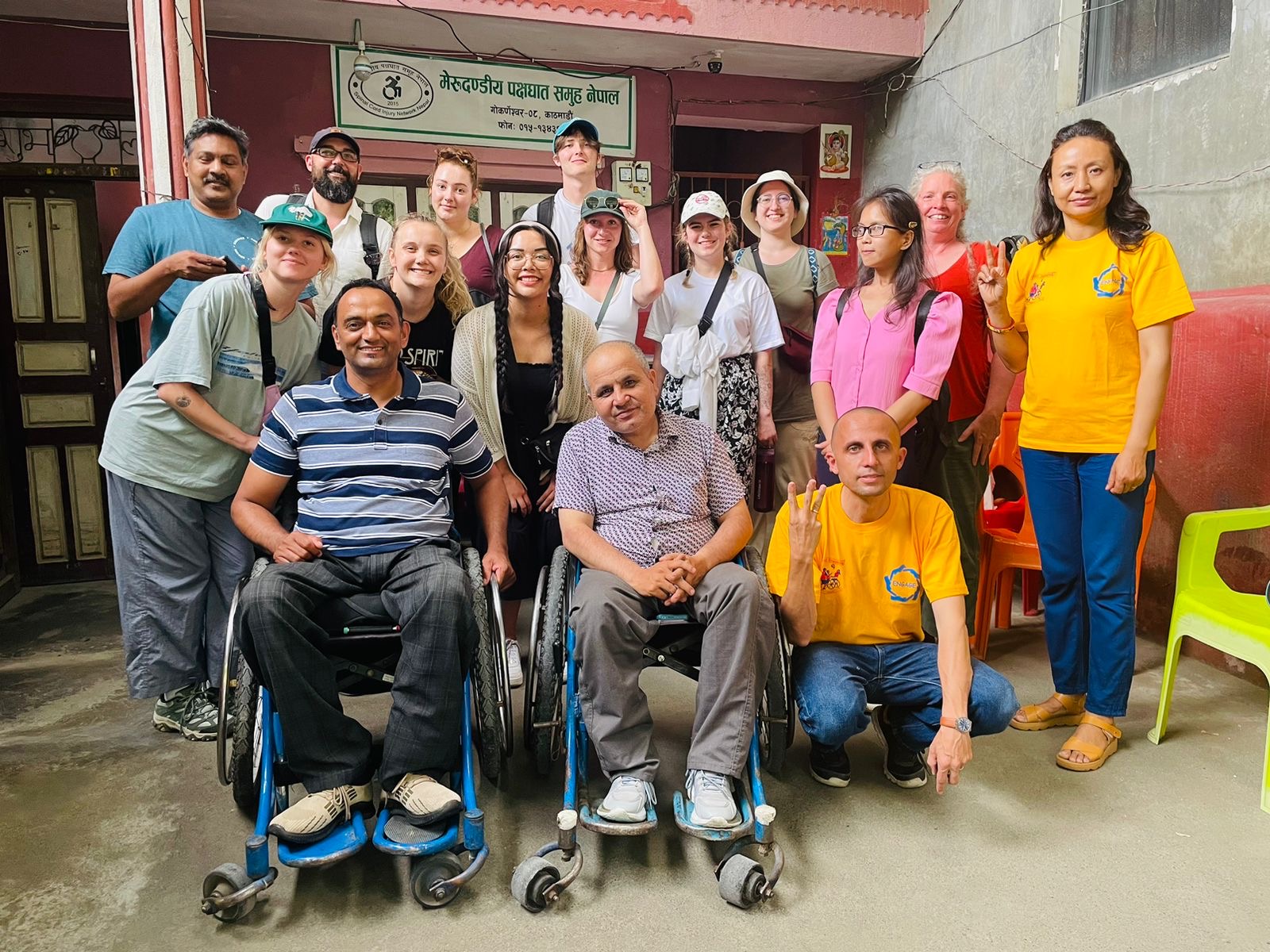
During my practicum as a field school attendee in Nepal, I had the unique opportunity to engage with multiple humanitarian non-government organizations (NGOs). This experience provided valuable insights into the operations, challenges, and impacts of these organizations in the context of a developing country.
Position Summary
My role as a student involved touring various NGO facilities to understand their operations and programs while participating in organizational meetings and educational workshops to observe the impact of NGO activity. I was a part of a group of ten students, most of which have a background in social work. Although my role was that of a student, my travel experience coupled with having years of teaching experience in a multi-cultural context, as well as being a graduate student, my role was expanded to help support group.
The NGOs which I visited were:
- Tewa:
“Tewa supports all women to organize, raise their voices collectively for economic growth opportunities, strengthening women’s rights and transform discriminatory policies, systems, norms, and practices at all levels. Tewa emphasizes on community philanthropy, capacity development, movement building, networking and collaborations with likeminded organizations of self-reliance and creating an equitable society.” Website: tewa.org.np/
- Engage:
A Nepalese not-for-profit organization promoting social inclusion that “works with youths with disabilities, supporting their empowerment process through a flexible, tailored made approach. To achieve their goals, they build partnerships with other members of the society, especially youths without disabilities.” Website: engage.org.np/
- Spinal Cord Injury Network:
“A non-profitable organization, based on providing education to spinal injured people as a student, age ranges from 7 years to 25 years.” facebook.com/Spinalcordinjurynepal/
- Youth Initiative:
“Youth Initiative believes that the investment on youth today will certainly contribute towards the holistic development of young people in micro, mezzo and macro level both in the present and the future.” Website: youth.org.np/
- Conscious Impact:
The organization aims to “connect people to themselves, each other and the Earth through community service work around the world.” Website: consciousimpact.org/
Apart from NGOs, we also had the opportunity to visit other organizations:
- Dhulikhel Hospital:
This facility “is an independent, not for profit, non-government institution, which was conceived and supported by the Dhulikhel community, as a quality health services provider. The Hospital is guided by the principles of social equity, sustainable development and harmony with nature. Through its trained staff, it provides cost effective, compassionate and quality health care services.”
Website: dhulikhelhospital.org/
- Kadambari Memorial College of Science and Management:
Established in 2005 with affiliation to Purbanchal University. “Today, Kadambari Memorial College stands as a beacon of academic vibrancy and proactive engagement. With an unwavering focus on quality education, we aspire to become a national institute of excellence in Social Work in Nepal.” Website: kadambari.edu.np/
I feel that although I gained a wealth of knowledge regarding the local and national HRSJ issues in Nepal, I acknowledge that there is yet much to learn about these issues on a global scale. Each corner of the world will be facing its own unique social challenges and human right struggles, and it would take a lifetime to acquire a holistic understanding of such a broad and complex topic, and for this reason I believe that my knowledge in this arena is still developing.
Orientation
The orientation to all the NGOs began in a similar manner with a greeting and introduction of the staff, clients and the students of our group. A presentation by the NGO would follow to inform our group of the mission of that particular NGO. The presentation came in numerous different ways: Kadambari College gave us a slide show and then a choreographed traditional dance. Engage had us sit in a large circle while the staff and clients shared the purpose and work of the NGO and its importance in bringing positive change to the lives of Nepalese people with disabilities. Tewa, Tukee, Youth Initiative, and Dhulikhel Hospital gave us a slide show with photographs documenting their work followed up by a question period, while the Spinal Cord Injury Network and Conscious Impact had casual conversation while serving the group traditional food. The common thread of these orientations was that us students were presented the opportunity to interact with the workers and/or clients of the NGO, ask questions, and share about our own experiences as students in the field.
In terms of the format of these orientations, most were relatively informal, semi-structured affairs, except for Kadambari College, which was quite formal, with planned speakers on a stage, preplanned break out discussion groups for a more focused conversation, and Q&A session around the challenges of social work in Nepal.
Further Understanding
There were many instances where the Nepal field school practicum experience helped further my understanding of HRSJ issues. As an example, having been used to the established infrastructure of both the physical environment as well as the social fabric of Canada, I was able to see where there were gaps in the above. Although Canada is far from perfect when it comes to accessibility and opportunity for people with disabilities, it does have legislation in place to ensure that these people are not left on the fringes. Nepal on the other hand has very little in the way of infrastructure for people with mobility challenges. By talking with both the staff and clients of Engage, I was informed of the many obstacles faced by people with mobility issues, be it access to public spaces and transportation, or barriers that result in inadequate education or work opportunities.
My understanding of Nepalese social issues was further broadened through a presentation I attended by the Youth Initiative, and by also talking with many youths in the city of Kathmandu. A problem faced by young people in Nepal is a lack of opportunity in both the work and political sphere. Because of this many Nepalese youth leave the country when able, bringing with them their education, leading to widespread brain-drain and a shortage of people to fill cerebral professional roles. This problem is something that as a Canadian I thought little about as it is not a widespread issue here. In fact, many Nepalese youths flock to Canada, hopeful for future opportunities, with TRU hosting hundreds.
The field school practicum presented many occasions where my knowledge of HRSJ issues expanded and was an invaluable tool to my education by providing a widespread examination of some of the country’s most sizeable social issues.
Practicum Highlight
The highlight for me was the connections – the opportunity to connect with people from varying backgrounds, to hear their perspectives on a plethora of HRSJ topics, and to engage in important conversations in an area I am innately motivated to continue my learning in, has been invaluable. Additionally, gaining insights into the operational intricacies of various NGOs, how they approach different challenges, build capacity in their foundation, and uphold their values has been crucial in deepening my understanding and provide me with useful tools, and has excited me to continue this collective learning path.
Networking
The primary way of networking came from orientation meet and greets. Introductions and presentation of varying formats at these orientations set the tone for meaningful sharing and conversations in topics related to HRSJ, and informal and relaxed networking environment allowed space for sharing and connection with people from various backgrounds. I was grateful for these networking sessions as it provided me with an opportunity to share about my thesis and gather contact information of interested potential participants. This may allow me the prospect of conducting interviews and surveys with them. Additionally, I see great value in fostering these international relations, as it offers the opportunity to expand in a career beyond borders.
I would like to share my gratitude for Dr. Bala Nikku, Associate Professor, Faculty of Education & Social Work, who supported and facilitated this practicum program with thoughtfulness and care. Bala played a pertinent role in introducing me to members of various organizations which I will use moving forward.
Challenges
An aspect of the Nepal field school practicum which I found somewhat challenging was the influx of information and experiences which felt overwhelming given our limited time there. These experiences and interactions were unique and profound for many of us, and not having enough time to process and reflect, as well as having some time to share and discuss with peers, made it challenging to process and document it. For future iterations of this program, it would be helpful to embed time during the field school, for individual and collective reflection. This would allow for a more wholesome experience.
Another challenging aspect was engagement with local population. Interacting with people from different cultures, ethnicities, and languages can be challenging. I have experience working in a multicultural environment, however, many folks including myself found it challenging to process the rich yet busy itinerary.
Reflection
The Nepal field school as a practicum was one of the most enriching and rewarding experiences of my educational journey. Dr. Bala Nikku afforded me an indispensable networking opportunity, providing professional contacts that can and will be used in my future career. It allowed me to not only gain insight into the workings of a not-for-profit non-government organization, but to truly engage with staff and clients on the ground level with a variety of organizations, imparting me with a broad understanding of how an NGO operates to fulfill its humanitarian obligations.
The travel experience to Nepal and the months spent in Kathmandu interacting with the locals, observing the customs, and engaging in traditional ceremonies proved to be in and of itself a highly educational affair. This gave me the possibility to encounter and understand the human rights and social justice issues that is lived through by the average citizen without observing through the lens of an organization. It permitted me to hear, see, and feel with the inhabitants of Nepal, albeit from the perspective of a visiting Canadian, but a gratifying and highly beneficial experience, nonetheless. The knowledge I gained from ad hoc interactions with locals, while not as formal and structured as that which was gained from NGO presentations, was still an exceedingly educational and enlightening event that is tremendously relevant to my field of study.
The field school-as-practicum experience proved to be a greatly successful undertaking and one in which I would highly recommend to any student wishing to build their knowledge in the field of HRSJ. I truly believe that the field school bestowed me with a learning experience that was deeply thorough yet uniquely broad, allowing me to gain insight into a comprehensive range of topics and organizations, something that a practicum with a single company or organization could not provide.
 globalindigenousvoice.org